دليل الدخول الكامل إلى أسواق المملكة العربية السعودية




A New Center of Gravity for Global Trade
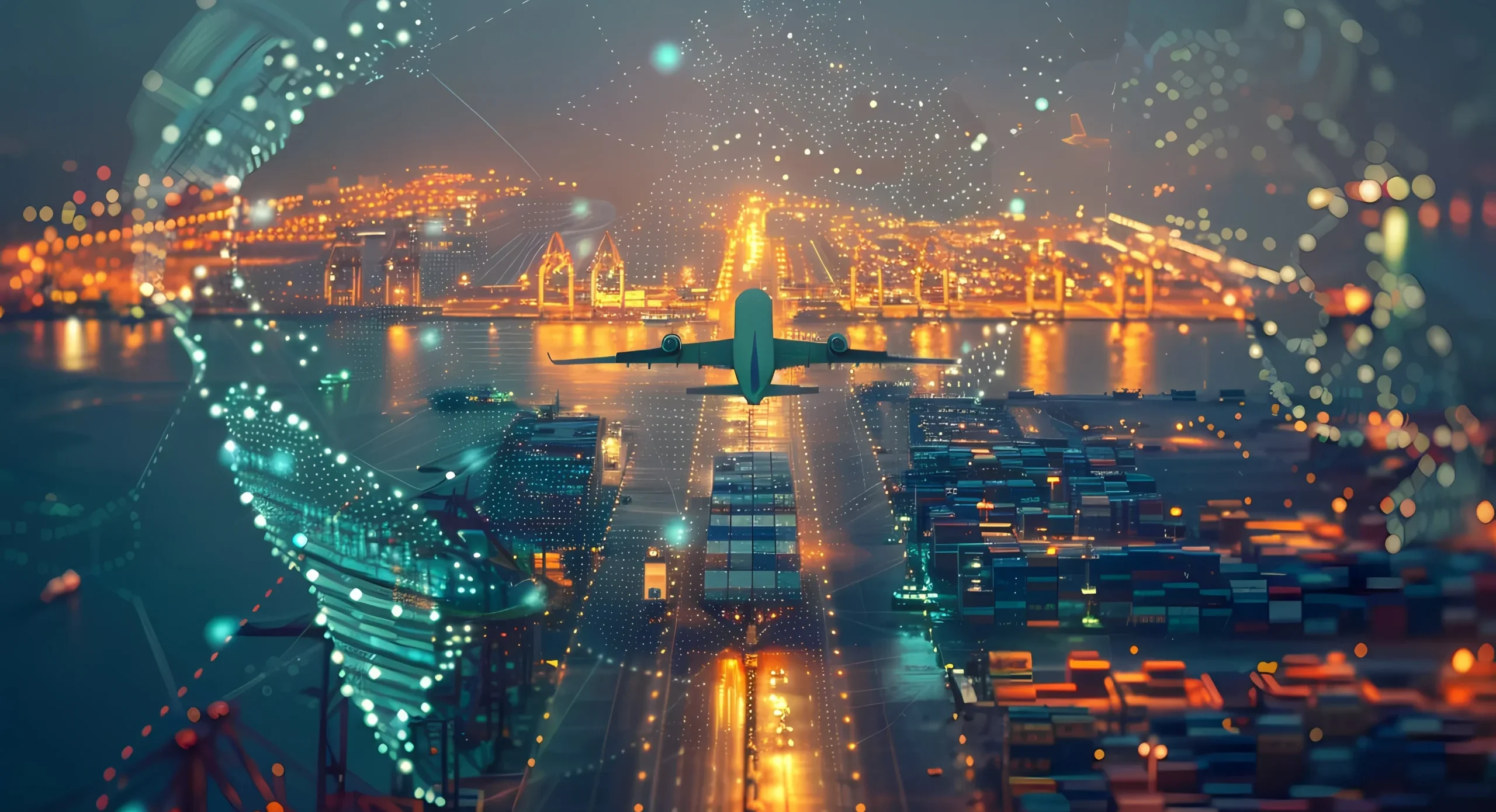
13% of global trade passes your front door in Oxagon. As Saudi Arabia hosts the UN Global Supply Chain Forum, the shift toward green, AI-driven logistics is reaching a tipping point.
Few statistics capture the weight of a region quite like this one: roughly 13% of global trade flows past the doorstep of Oxagon every single day. That figure is not a forecast or a projection, it is the present-day reality of the Red Sea corridor, a maritime artery so critical that any business operating along it sits on top of one of the most valuable pieces of logistics real estate in the world. For decades, much of this traffic has simply transited through the region. What is changing now is the opportunity to do more than transit, to plug into it.
That shift is being accelerated by an unmistakable transformation underway in the Kingdom. Saudi Arabia is rapidly transforming into a global logistics powerhouse, and that emerging status is no longer a quiet ambition reserved for policy documents. It is moving into full public view, and the world is taking notice.
Saudi Arabia Takes Center Stage at the UN Global Supply Chain Forum
The Kingdom’s new logistics identity will be fully showcased when Saudi Arabia hosts the UN Global Supply Chain Forum in November 2026. Hosting an event of this scale is more than a ceremonial milestone. It is a clear signal that Saudi Arabia intends to help shape the rules, standards, and partnerships that will define international trade for the next generation.
Held in partnership with the Saudi Ports Authority (MAWANI), the forum will bring together governments and business leaders to promote sustainable logistics. The choice of partner is meaningful in itself: MAWANI sits at the heart of the Kingdom’s port and maritime ecosystem, which makes it perfectly placed to translate high-level policy conversations into the practical infrastructure that businesses actually rely on.
The agenda, green logistics, AI-driven operations, sustainable supply chains, is not abstract. These are precisely the themes that boards, shippers, manufacturers, and investors are wrestling with right now. Hosting the conversation in Saudi Arabia, with active participation from the Kingdom’s own port authority, places the country at the Center of where global logistics is heading rather than where it has been.
Oxagon: The World's Largest Floating Industrial Structure
While the forum will set the global tone, Oxagon will provide the physical, operational expression of it. Establishing a base in Oxagon offers a massive first-mover advantage, particularly because it is slated to become the world’s largest floating industrial structure.
That description deserves to land properly. A “floating industrial structure” of unprecedented scale is not simply a port upgrade or a free zone. It is a fundamentally different way of imagining where industry sits and how it relates to the sea, to shipping lanes, and to the energy systems that power it. Being among the first companies to establish operations inside a structure of this kind means helping to define the standards, partnerships, and supply networks that everyone arriving later will have to fit into.
For global manufacturers and logistics operators, that first-mover advantage is rarely available in mature markets. In Oxagon, it is genuinely on the table.
Strategic Position Meets Sustainable Operations
Geography is the first reason to look closely at Oxagon. It is strategically positioned on the Red Sea near the Suez Canal, one of the most consequential chokepoints in global commerce. That single fact aligns Oxagon with the trade flows connecting Asia, Africa, and Europe, and places it within reach of the customers, suppliers, and shipping routes that matter most.
But geography alone is not what sets Oxagon apart. The city operates entirely on renewable energy and circular-economy principles. In an era when shippers, regulators, and end-customers are all demanding lower-carbon supply chains, having a base that runs on renewables from day one is not a marketing line, it is a structural advantage. Manufacturers no longer need to retrofit sustainability onto legacy operations; they can build their footprint inside a system designed around it.
Combined with circular-economy principles, where waste streams from one process can become inputs for another, Oxagon offers something genuinely rare: an industrial location where strategic position and sustainable design reinforce each other rather than compete.
Embracing the Blue Economy
A defining feature of this net-zero city is its dedication to the “Blue Economy.” Over 10 square kilometres are allocated to marine exploration, sustainable aquaculture, and an Institute for Marine Science and Oceanography.
The numbers matter, but the philosophy behind them matters even more. The Blue Economy is the idea that the ocean is not just a surface to ship goods across, but a living system that can support food production, scientific discovery, and new industries, provided we treat it with care. By dedicating more than 10 square kilometres to this vision, Oxagon is putting genuine space, capital, and institutional weight behind it rather than treating it as an aside.
For sustainable aquaculture operators, marine researchers, and ocean-economy startups, this creates an unusual concentration of opportunity in one location. For traditional manufacturers, it signals the kind of long-term thinking that makes a host city worth committing to.
Operational Momentum and the First-Mover Window
Big visions are common; operational momentum is rarer. Oxagon already has it. The first industrial license in Oxagon was issued to the NEOM Green Hydrogen Company, a clear indication that the city is not waiting for some distant future to arrive, industrial activity is already underway.
That first license is more than a piece of paper. It is a marker that the regulatory frameworks, permitting processes, and operational pathways needed to actually run a business in Oxagon are being put through their paces. Each successive licensee benefits from those early footsteps, while the very first arrivals get to influence how those processes evolve.
This is what a genuine first-mover advantage looks like in practice, not a slogan, but a window of time during which strategic positioning, partnership selection, and infrastructure decisions are still genuinely open.
Anchoring Your Future in the Red Sea
The pieces are converging. Saudi Arabia is hosting the UN Global Supply Chain Forum in November 2026 in partnership with MAWANI, signalling its intent to lead the global conversation on sustainable logistics. Oxagon is materialising as the world’s largest floating industrial structure, anchored on the Red Sea, powered by renewables, organised around circular-economy principles, and committed to the Blue Economy. Industrial activity is already live, and the first-mover window is open but will not stay open forever.
For global manufacturers, establishing a base here is an opportunity to anchor their business in a radically sustainable, strategically connected, and rapidly materializing future of industrial innovation. The trade is already passing your front door. The question is whether you are watching it go by, or building inside it.